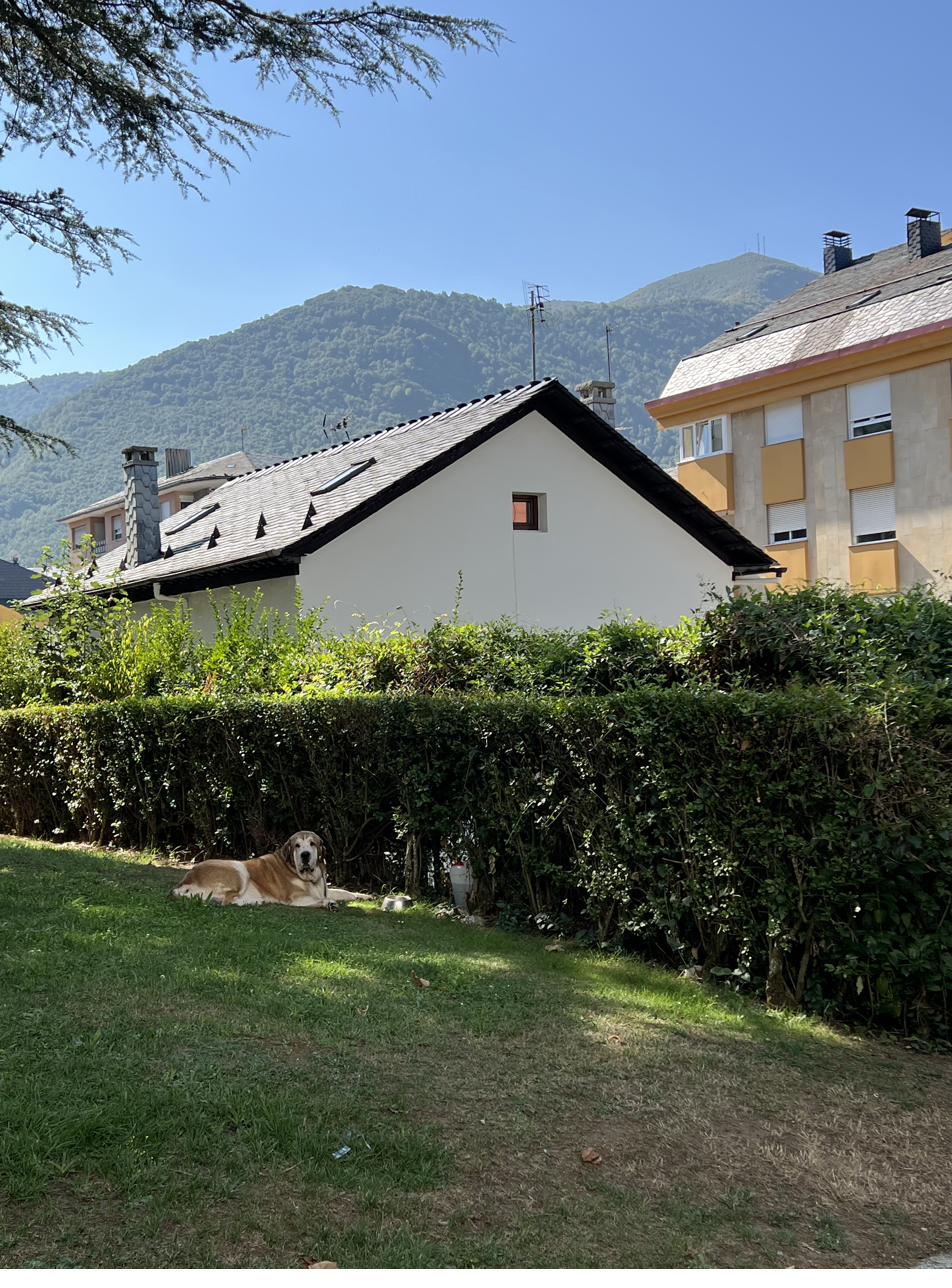
La Veiga was the name of the area of fields — maize and other crops — bordering the village of San Miguel. The particular spot where the house was built was known as "El Zarzalón". Today it is all part of Villablino, though it keeps its own identity.
Scan · read · stop by again sometime
This was the first house of La Veiga — and, without exaggeration, one of the first buildings of modern Villablino: it was built even before the village church. Stone by stone, peseta by peseta, it was raised by a family of miners.
In its early years, the house was known and used as a reference point under the name La Veiga — even the post was addressed that way. That name is barely remembered now; today, if anyone names it, it's as Enriquitín's house.
The house's ledger
The house, through time
A chronological journey through the photographs that survive of the house and the people who lived in it.
1950s
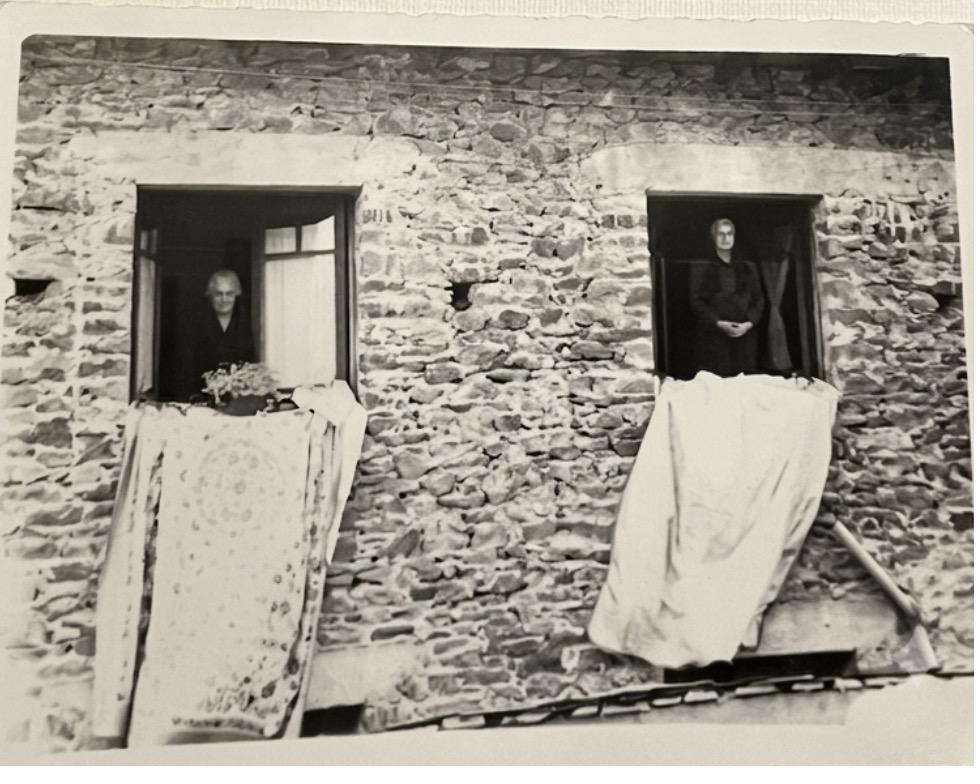
Facade still in bare stone, unplastered · Tía Pepa (left) and her sister Adelina (right), looking out of the window
Corpus Christi day
This photograph captures a custom that has almost disappeared today: on Corpus Christi day, houses in the village were dressed up with the family's finest bedspreads, shawls and damask cloths hung from windows and balconies — often pieces from a bridal trousseau — to adorn the procession route.
The Corpus Christi custom
This was no ordinary decoration: bringing out the finest linens and bedcovers was also a way of showing off the house and taking part in a feast that wound through the whole village. In an era when the facade was still bare stone, those colourful cloths were, for one day, the house's best face.
1958
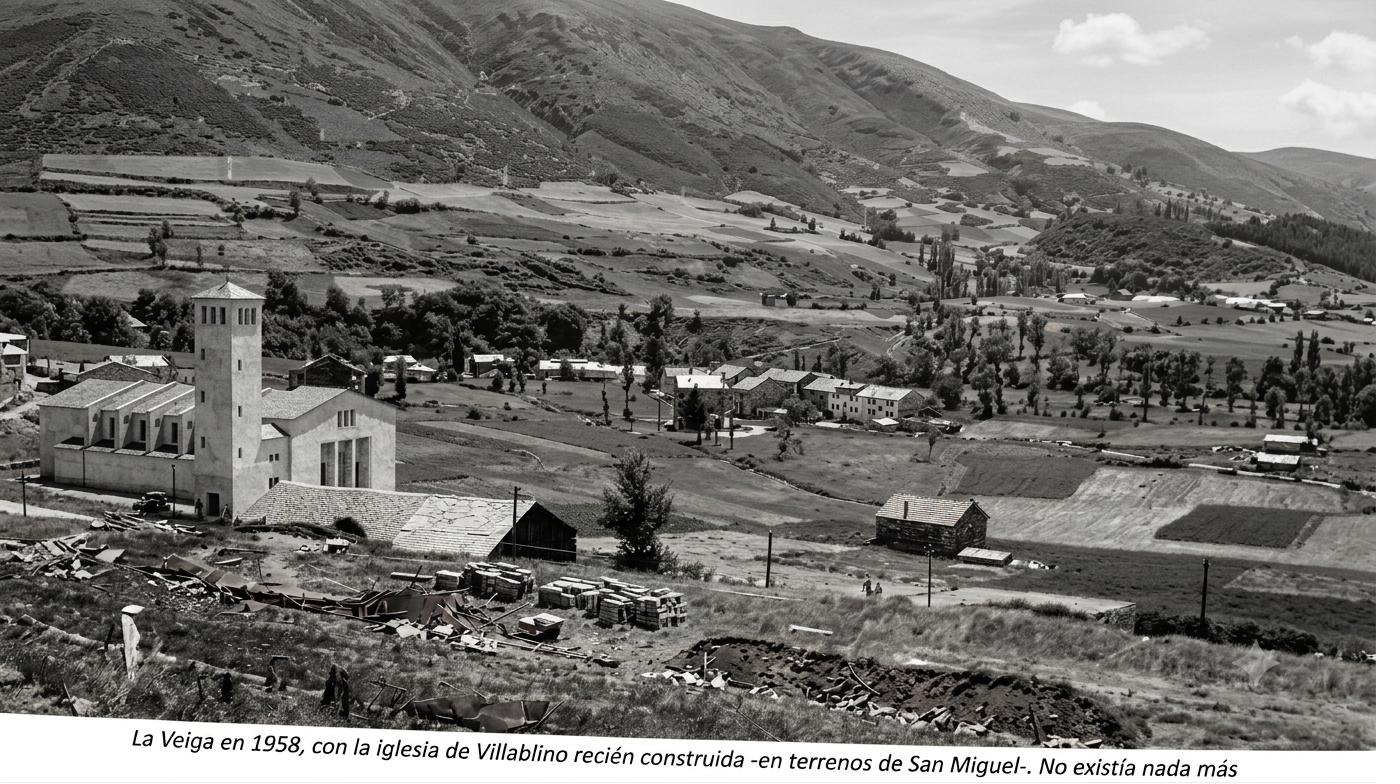
La Veiga in 1958, with Villablino's church newly built — on land belonging to San Miguel. Nothing else existed yet
When there was nothing around it yet
This 1958 panoramic view shows the valley when Villablino's church had been standing for only a few years. The La Veiga house, built in 1950, was already there before much of what is now the centre of the village.
c. 1958–60
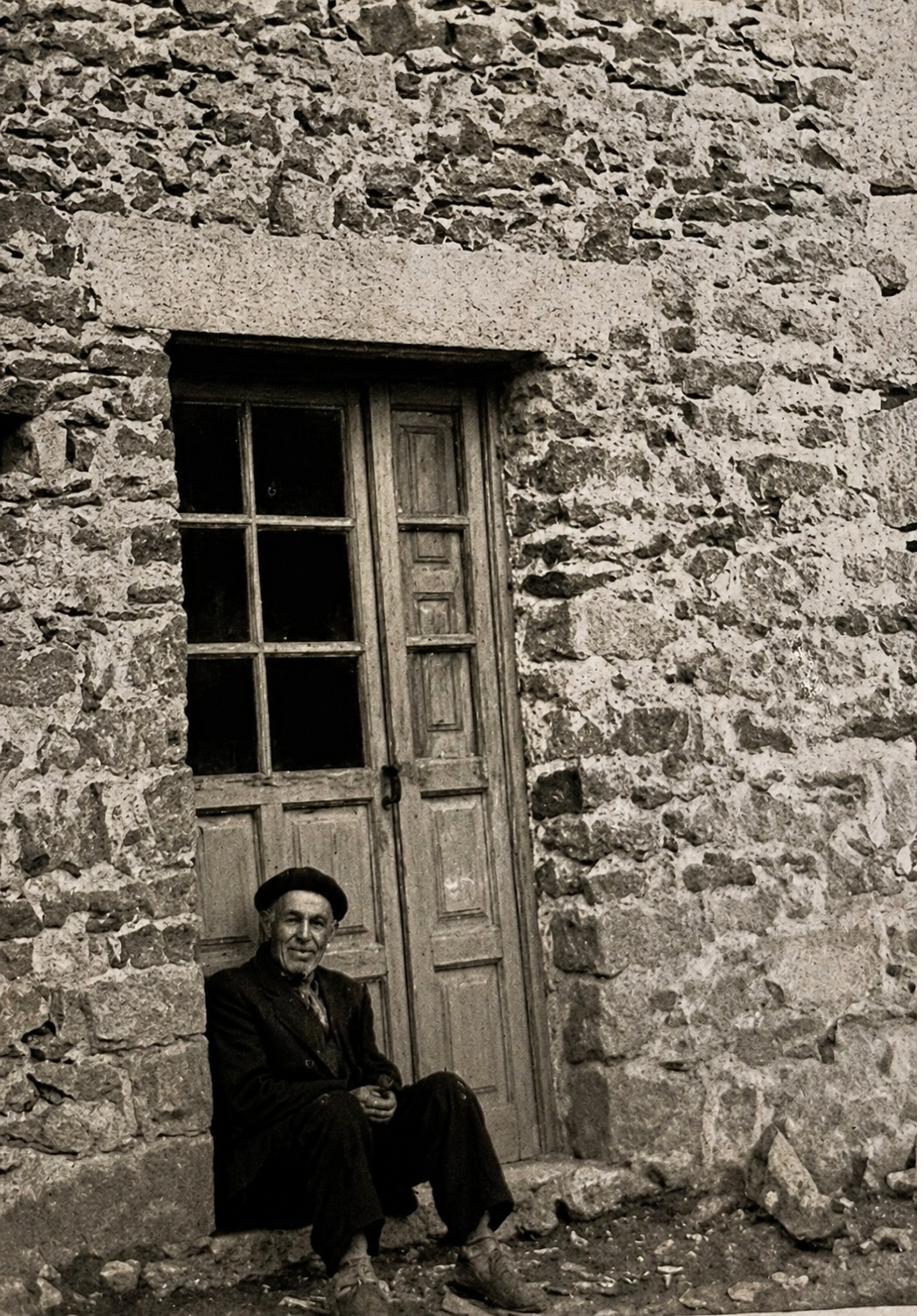
Enriquitín, at the front door
Enriquitín, retired from the mine
With his lungs marked by silicosis, Enrique — "Enriquitín" — born in Busante (Ibias, Asturias), spent his last years on the very doorstep he had built with his own hands, already past seventy.
1960s
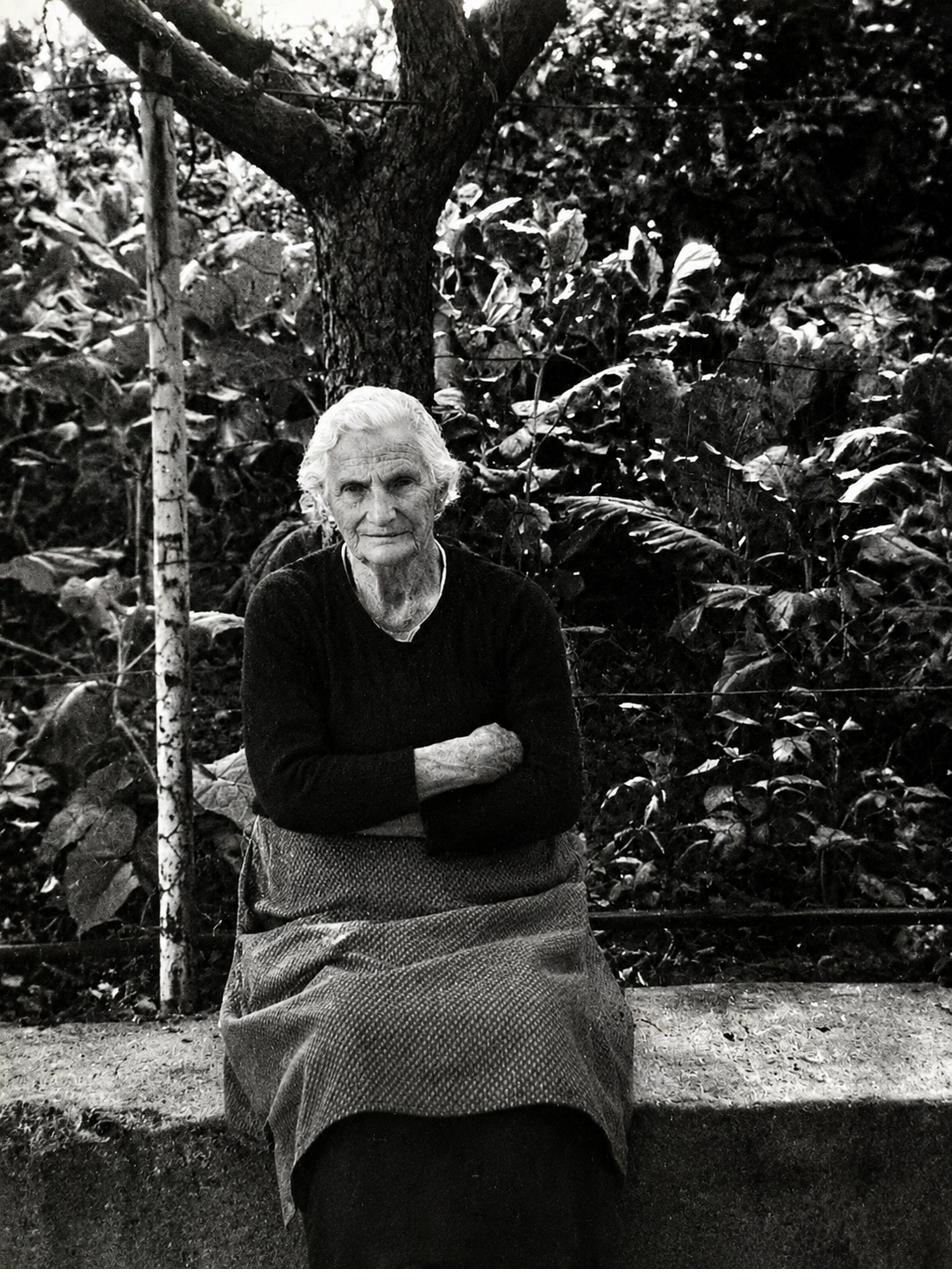
Adelina
Adelina, holding up the household economy
While the mortgage and the neighbours' loans were being paid off, Adelina held up the family economy by renting out the two ground-floor dwellings.
c. 1963
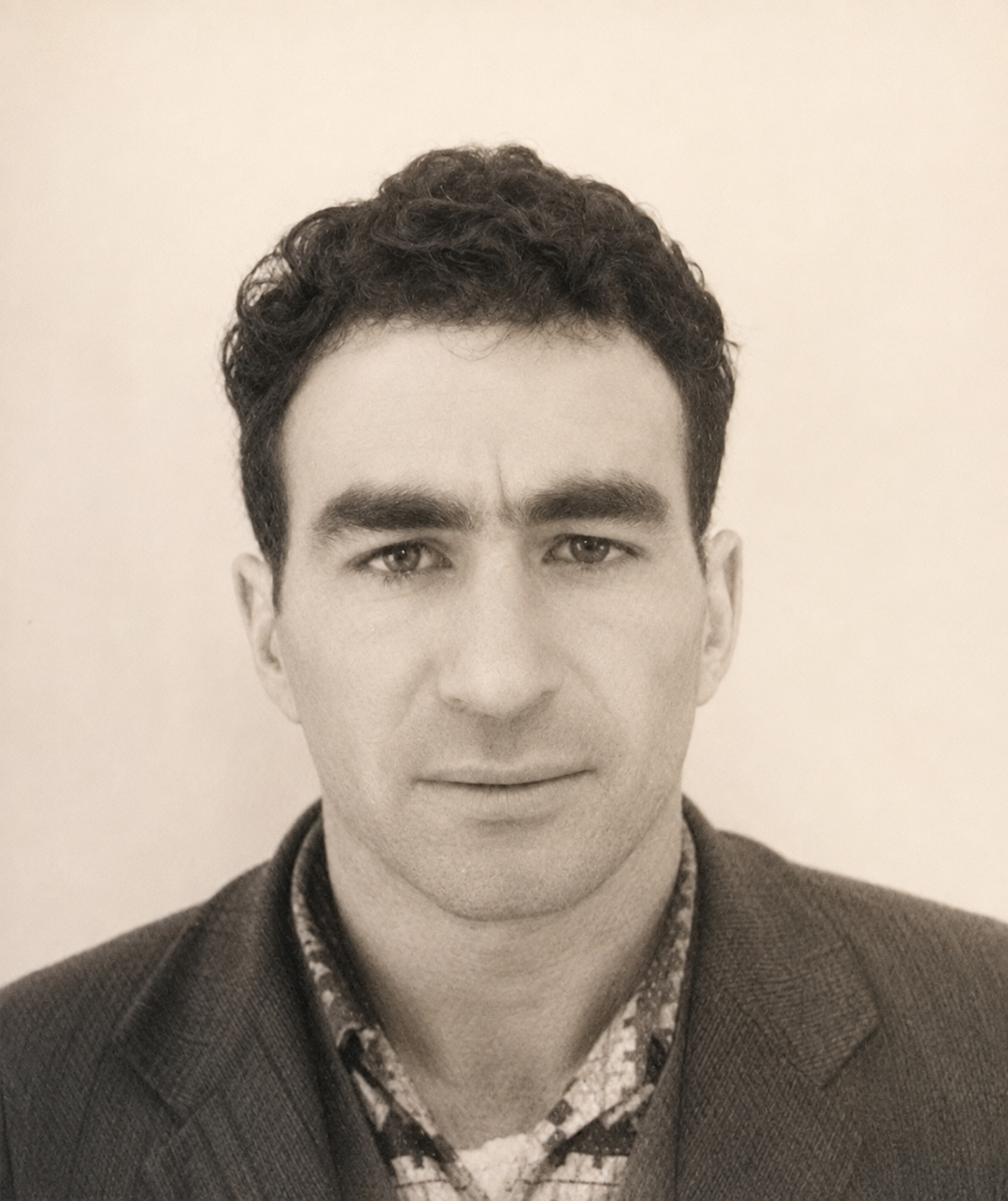
Paulino, around age 38
Paulino, a miner like his father
Born in San Miguel, where the family lived before building the house. Unmarried and barely into his twenties, he helped raise the house stone by stone alongside his father. By the time this photograph was taken he was already married to Edelmira, with whom he raised his children here, and he kept supporting the house with his miner's wage, year after year.
~20 years ago
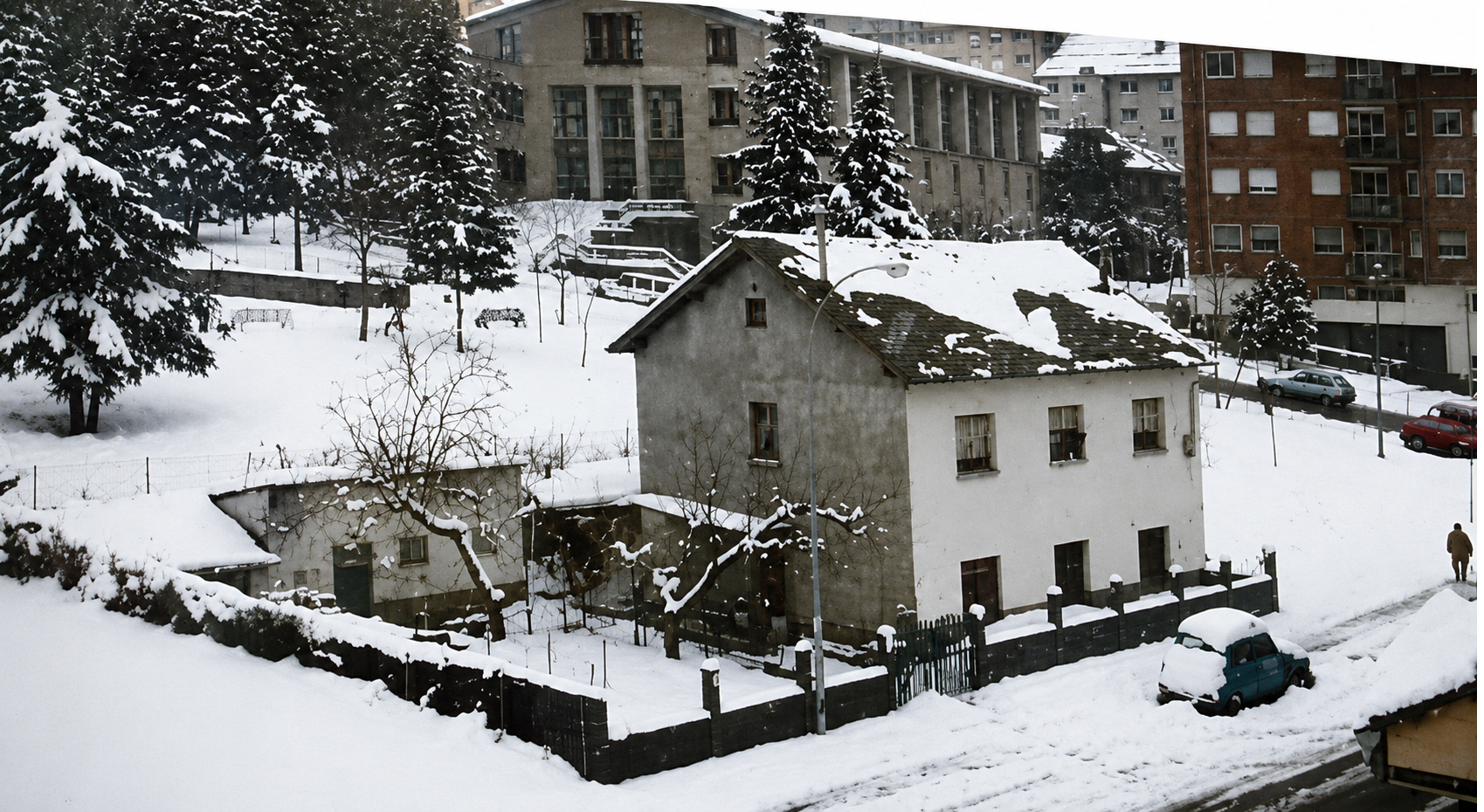
The house, now established, under snow, among the buildings that grew up around it
The house, established
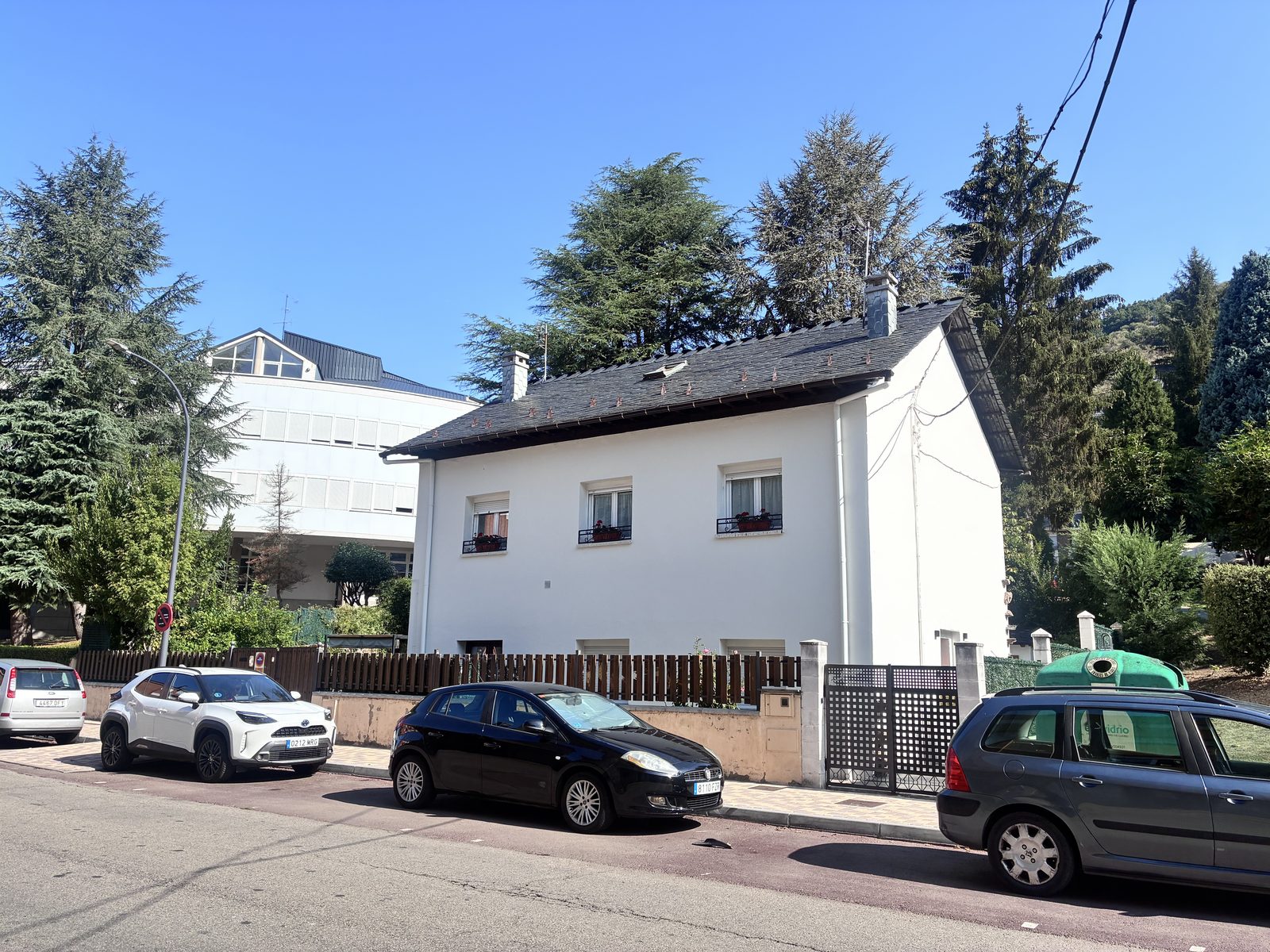
Now plastered and rendered, the house stands surrounded by the Villablino that grew up after it — the same blocks and buildings that today share the street with the last original building of La Veiga.
2025
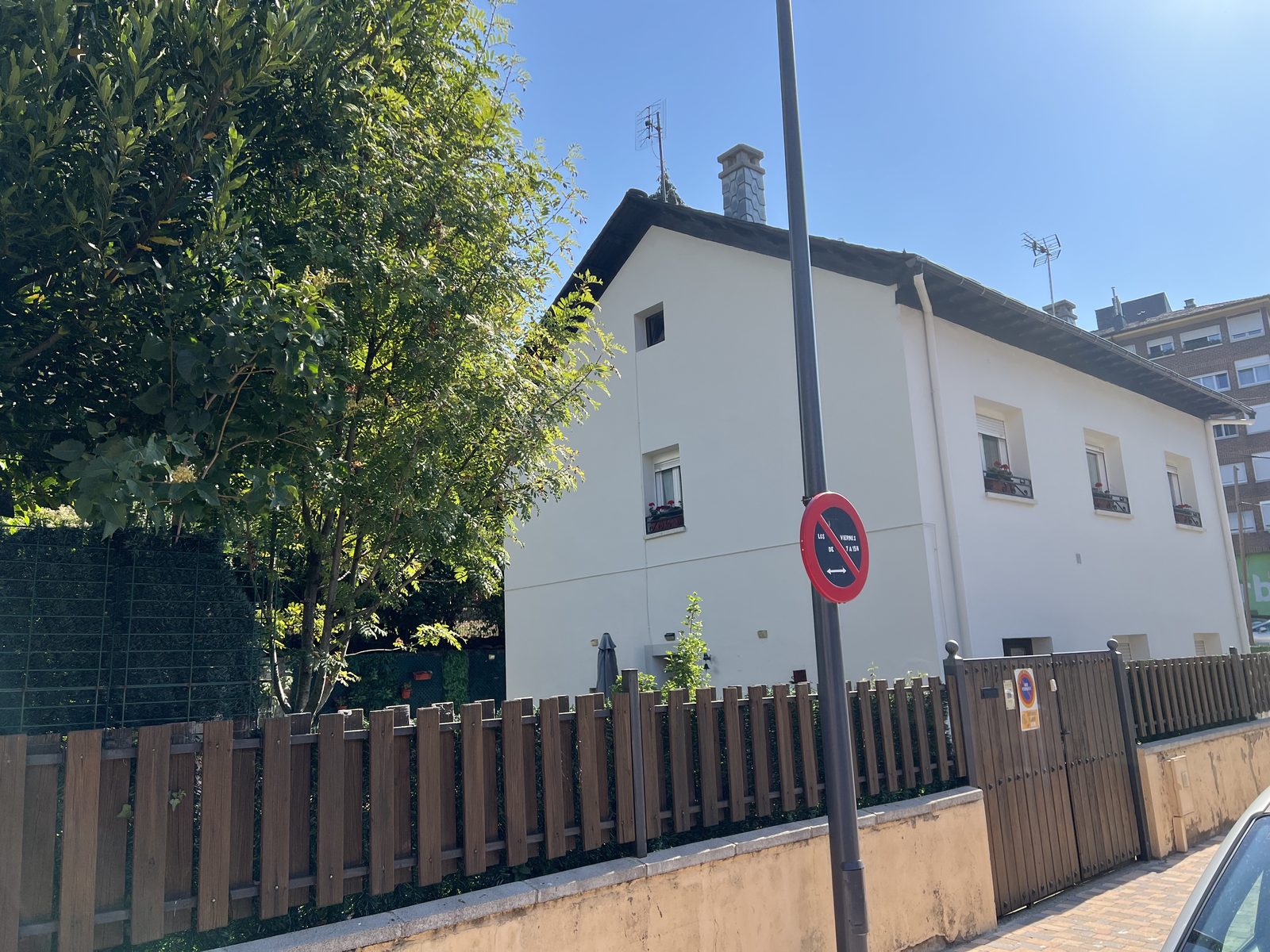
The house today, after the 2020 renovation and repainted in 2025 (provisional photo — to be replaced with one showing more of the facade)
The house, today
Seventy-odd years after that 1950 build, the house is still standing, still in the family, and still has something to tell.
The family who built the house
Enriquitín, Adelina, Paulino and Edelmira
1878 — 1960
Enrique · "Enriquitín"
Born in Busante (Ibias, Asturias), he went down into the Laciana mines like so many second sons of mountain farmsteads. Retired from the mine, his lungs marked by silicosis, he built this house with his own hands well past his seventies, together with his son Paulino.
1893 — 1968
Adelina
From Folgoso de Ibias. Enrique's companion in the house and in its debt: she held up the family economy by renting out the two ground-floor dwellings while the mortgage and the loans were being paid off.
1925 — 2009
Paulino
Born in San Miguel, where the family lived before building the house. Son of Enrique and Adelina, a miner like his father. Unmarried and barely into his twenties, he helped raise this house stone by stone alongside him, while two of his brothers left for Brazil. He went on supporting it with his wages, year after year — before and after marrying Edelmira, with whom he raised his children here.
Dates pending
Edelmira
On marrying Paulino she became a key figure in the house: she managed it and renovated it in the 1970s, cared for her mother-in-law — Tía Pepa — and raised her two children here. (a photograph of her is still to be added)
“Every stone of this house was paid for with mine shifts and sacrifice. Let whoever visits know it.”
The family of La Veiga · Villablino
La Veiga, Villablino · Family history recorded in León, 2026